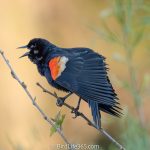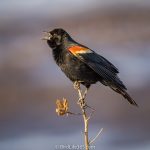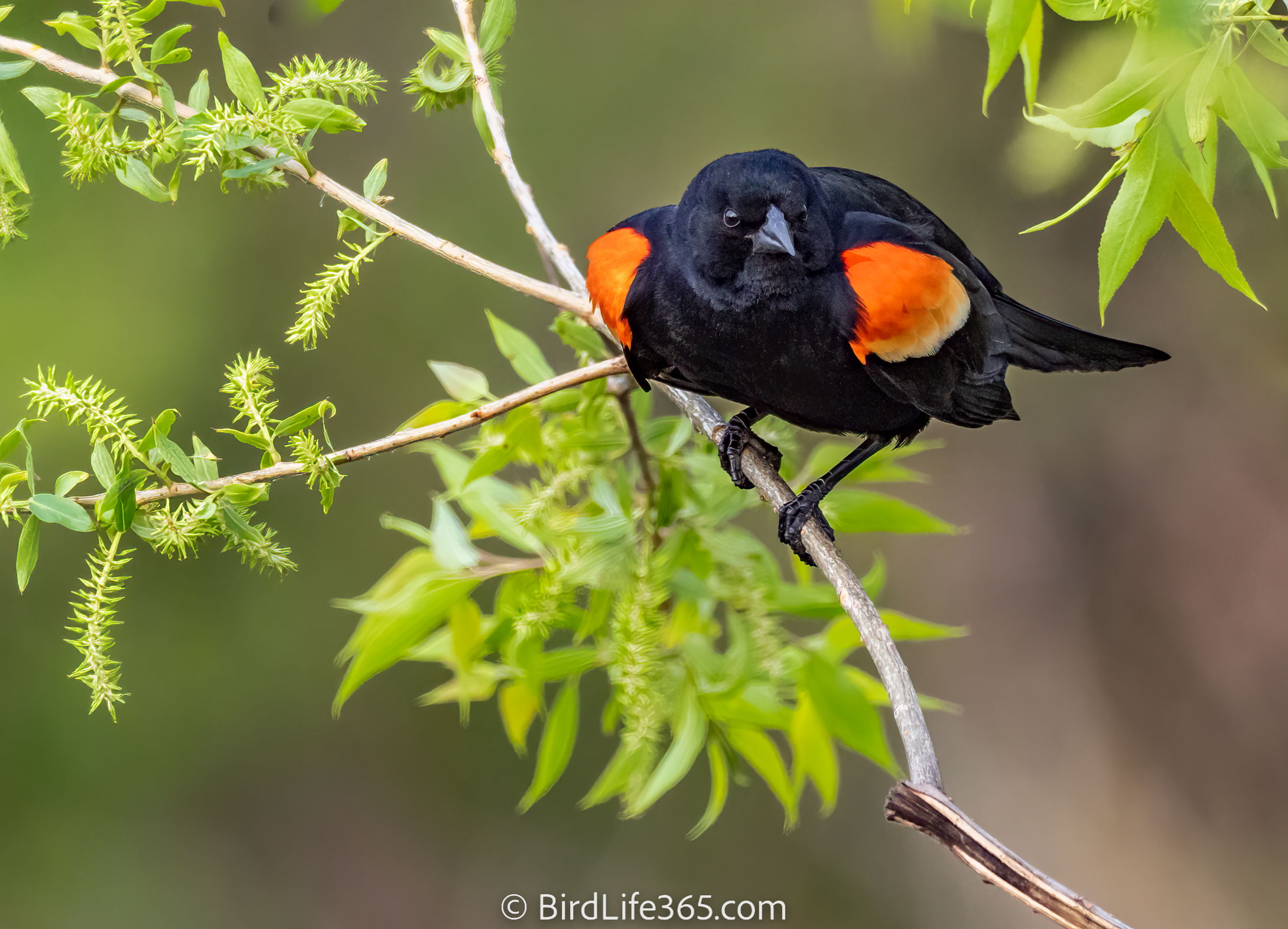
This weeks bird of the week is a real indicator for spring…at least to me. When they show up in the backyard you know the cold weather…the really wintery stuff, is probably over and done with.
Some of my more interesting experiences with Redwing Blackbirds would have to be when we watched millions of them at a refuge (marsh) in Missouri. During migration they can really congregate in huge flocks…and at dusk you’ll see these masses of blackbirds leaving to feed in nearby fields…or return to the marshes at sunset…these black, undulating clouds of birds is really something to see.
The other, not as enjoyable experience was getting plunked on the head when I got too close to a nest up in Dubuque. Now I didn’t know a nest was nearby, nor did I care to bother anyone about it, but the bird would decide my fate nonetheless. I was groggy from the early morning venture, but was soon wide awake and preparing for another attack. Fortunately it only thumped me once!
Here’s a few other things about the Redwing Blackbird that you may find interesting.
-
Distinctive Appearance: The male red-winged blackbird is easily recognizable with its glossy black feathers and striking red and yellow shoulder patches, which are called epaulets. The females, in contrast, are more subdued with brown streaked feathers, which provide excellent camouflage in their marshy habitats.
-
Territorial Behavior: These birds are highly territorial (as I mentioned earlier!), especially during the breeding season. The males are known to fiercely defend their territory against intruders, sometimes even attacking much larger animals, like horses and humans, if they feel threatened.
-
Polygynous Mating System: Red-winged blackbirds have a polygynous mating system, where males mate with several females. In some cases, a single male may have up to 15 females nesting in his territory. Each female builds her own nest and raises the young mostly on her own.
-
Habitat and Range: They are one of the most abundant birds in North America and can be found in wetlands, marshes, and along the edges of water bodies. Their population spreads from the Yukon and Newfoundland in Canada, all the way to the Yucatan peninsula in Mexico.
-
Diet and Foraging: Their diet is quite varied and includes seeds, insects, and even other small animals. They adapt their feeding tactics to the season; during the breeding season, they primarily eat insects, which provide a high-protein source necessary for the growth of their young.
-
Migration: Red-winged blackbirds are partial migrants. Birds in the northern parts of their range, like Canada and the northern U.S., typically migrate southward to the southern U.S. and Mexico for the winter. However, those that breed in the southern parts of the U.S. are often year-round residents.
-
Role in Ecosystems: They play a significant role in their ecosystems, not only as prey for birds of prey and other predators but also in controlling insect populations and facilitating plant reproduction through their seed-eating habits, which can help in the dispersal of plants.