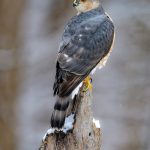
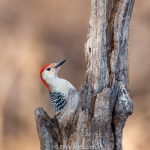
In my backyard, we have a handful of Yellow Shafted Flickers hanging around. I think if I were really pressed to choose only one “favorite bird”, the Flicker just might be it. Flickers belong to the woodpecker family, and are known for their distinctive behavior, appearance, and role in their respective ecosystems. Here are some interesting facts about them:
-
North American Species: The most commonly known flickers in North America are the Northern Flicker (Colaptes auratus), which has two primary subspecies: the Yellow-shafted Flicker in the east and north, and the Red-shafted Flicker in the west.
-
Colorful Plumage: Flickers are among the most colorful of the woodpeckers. The Yellow-shafted Flicker, for instance, has a black spotted plumage, a black bib, a red nape patch (in males), and bright yellow underwing and tail feathers that are vividly visible in flight. The Red-shafted Flicker, conversely, has red underwing and tail feathers.
-
Ground Feeders: Unlike many other woodpecker species that primarily feed on insects extracted from tree bark, flickers often feed on the ground. They have a particular fondness for ants and beetles, using their long, slightly curved bill to dig them out.
-
Drumming and Calls: Flickers are known for their loud calls, which can sound like a loud “wick-wick-wick.” They also engage in drumming on metal objects, which can be heard from far away. This behavior is part of their territorial display and communication, especially during the breeding season.
-
Migration Patterns: While some populations of flickers are sedentary, others migrate. Yellow-shafted Flickers in the northern parts of their range, for example, migrate south for the winter, while Red-shafted Flickers might move from the mountains to the plains in colder months.
-
Nesting Habits: Flickers are cavity nesters, often creating their nests in dead or dying trees. They play an important role in their ecosystems by creating nesting sites that are then used by other species that are unable to excavate their own cavities.
-
Hybrid Zones: In areas where the ranges of the Yellow-shafted and Red-shafted Flickers overlap, they interbreed, producing hybrids. These hybrids may exhibit a mix of features from both parent subspecies, such as a combination of red and yellow feather shafts.
-
Cultural Significance: Flickers have been significant in various cultures. For example, Native American tribes have used flicker feathers in ceremonial dresses and headdresses, attributing various symbolic meanings to the bird.
-
Conservation Status: Generally, flickers are considered to be of least concern by conservation organizations. However, they are affected by the loss of habitat and nesting sites due to tree removal and land development.