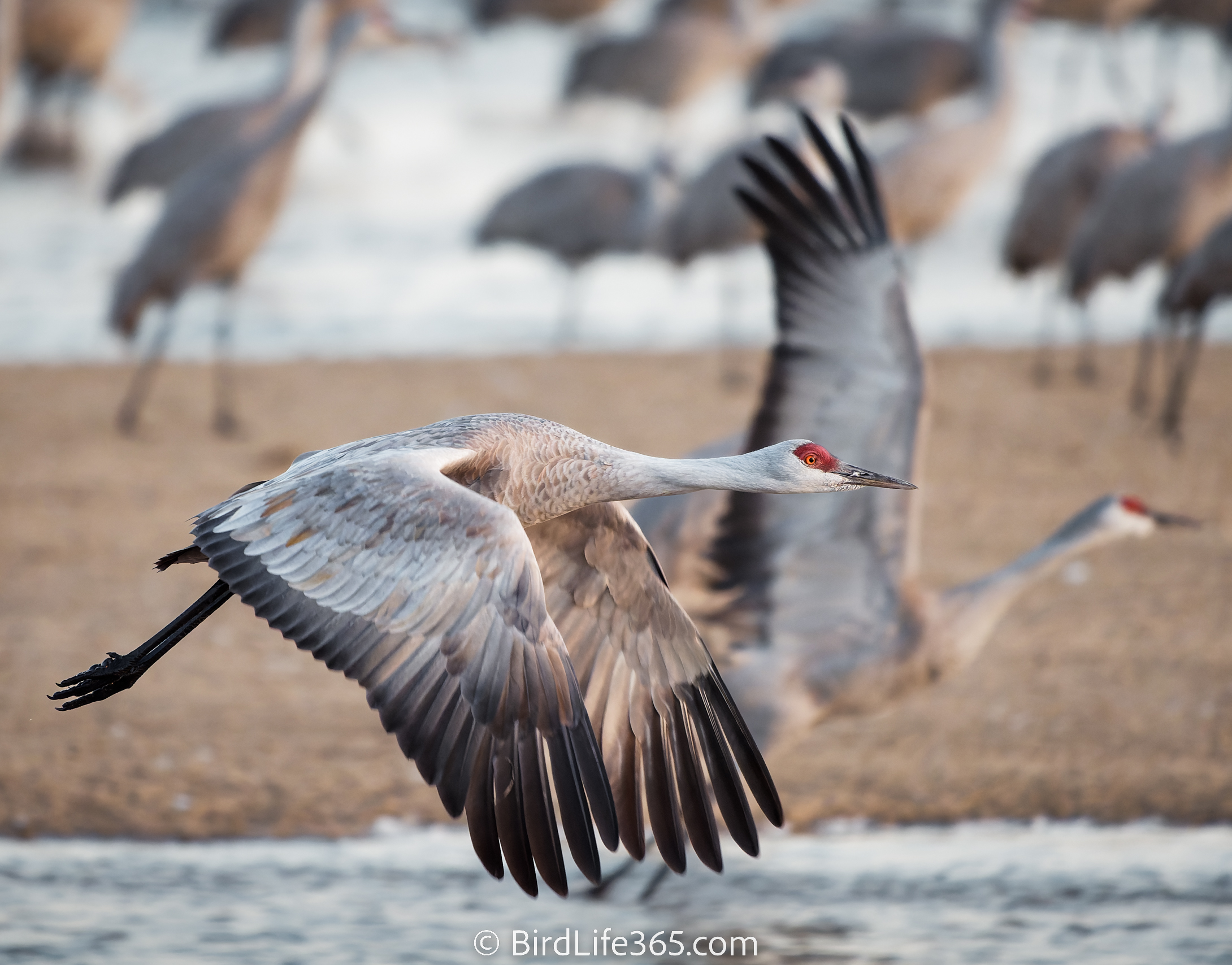
Somewhere around mid-March you’ll usually find me in the middle of Nebraska nestled along the Platte river. Each spring, hundreds of thousands of Sandhill Cranes migrate through this area, and the Platte offers a perfect place for them to rest up while on the journey North to their nesting grounds.
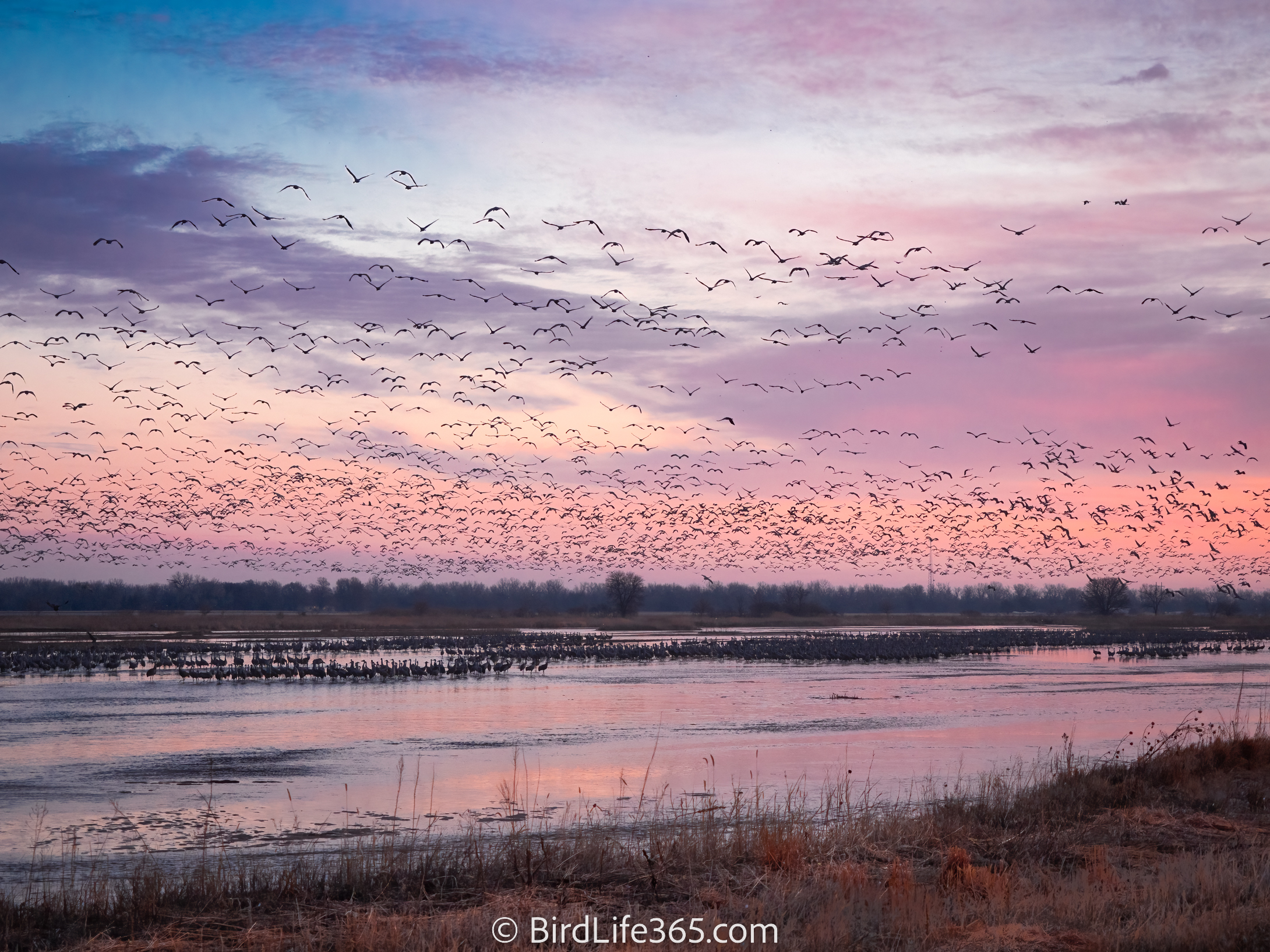
The Platte is very shallow but it’s perfect for night roosting on the sandbars. So every morning the cranes leave the river in huge masses, and they return to the river again near sunset. They spend the day out feeding in the fields. It is an amazing thing to see. So as the cranes build up their numbers in Nebraska, this week the Sandhill Crane will be our Bird Of The Week.
Sandhill Cranes (Antigone canadensis) are among the most ancient and fascinating bird species, known for their large size, distinctive calls, and graceful dances. These birds have captured the interest of birdwatchers and nature enthusiasts across North America and parts of Siberia. Here are some interesting facts about Sandhill Cranes:
-
Ancient Species: Fossil records indicate that Sandhill Cranes have been around for over 2.5 million years, making them one of the oldest living bird species that have remained essentially unchanged over the millennia.
-
Impressive Migratory Birds: Sandhill Cranes are notable for their long-distance migrations. Some populations travel from their breeding grounds in the Arctic and northern Canada to wintering sites in the southern United States and Mexico, covering distances of up to several thousand miles.
-
Distinctive Vocalizations: They are known for their loud, rolling, trumpeting calls that can be heard over long distances. These calls are unique because of a long, coiled trachea that acts like a natural trumpet, amplifying their sounds.
-
Elaborate Mating Dances: Sandhill Cranes are famous for their elaborate courtship dances, which include jumping, bowing, and wing-flapping. These dances are not only for attracting mates but also play a role in pair bonding and aggression deflection.
-
Height and Wingspan: Standing up to 5 feet tall and with a wingspan of 6 to 7 feet, Sandhill Cranes are large and imposing birds. Despite their size, they are graceful fliers and can ride thermals to great heights during migration.
-
Longevity: They are known to live a long life in the wild, with some individuals reaching ages of 20 years or more. The oldest known Sandhill Crane in the wild lived to be at least 36 years old.
-
Diverse Habitats: While they prefer wetlands, marshes, and riverbanks for breeding and feeding, Sandhill Cranes can adapt to a variety of habitats, including agricultural fields and grasslands, where they forage for grains and invertebrates.
-
Group Behavior: Outside of the breeding season, Sandhill Cranes gather in large flocks, sometimes numbering in the thousands. These congregations provide safety in numbers from predators and are a spectacular sight for birdwatchers during migration.
-
Diet: Their omnivorous diet includes plant material, grains, insects, small mammals, and amphibians. This varied diet allows them to adapt to different environments throughout their migratory range.
-
Conservation Status: While Sandhill Cranes are currently not endangered and have a stable population, they face threats from habitat loss and degradation, especially in their wetland breeding areas. Conservation efforts continue to be important to ensure their habitats are preserved.
-
Cultural Significance: Sandhill Cranes hold significant cultural and spiritual importance for many Native American tribes, symbolizing peace, longevity, and fidelity. They are also celebrated in modern festivals, such as the annual Crane Festival in Nebraska, where thousands gather to watch their migration.
These interesting facts about Sandhill Cranes highlight the beauty and resilience of these ancient birds, emphasizing the importance of conservation efforts to ensure their continued presence in the wild.